The God Who Reveals

In a recent course I was required to summarize my personal convictions concerning the doctrine of revelation. I was very much blessed by being required to formulate and then communicate a personal statement of belief regarding this doctrine. I hope to write more of these in the future which help clarify my own thoughts. I look forward to any criticisms you might have.


The God Who Reveals

It is unthinkable to formulate a doctrine of revelation without mention of the God who reveals. The Christian faith is unique in worshiping a God who is both there and not silent.[1] Before one can have a doctrine of revelation one must have a doctrine of God that allows for revelation. The God of Scripture is such a God.

The assumption of the Bible is that there is a triune God: one God existing in three persons, who has created all things. The manner in which the triune God creates is through His word. Eight times in Genesis creation comes from the voice of God, “And God said…” (Gen. 1:3,6,9,11,14,20,24,26). This is not only evident from observing the narrative in Genesis, but also in clear in the teaching of the New Testament. Hebrews 11:3 reads, “By faith we understand that the universe was created by the word of God, so that what is seen was not made out of things that are visible.” God’s word then is God’s action. Therefore, they cannot be separated. Where God’s word is He is. God works through the power and authority of his word.

God Revealed as Covenant Lord

If God is the creator of all things then there is an obvious distinction between God and his creation. God is not his creation and creation is not God. The purpose then of God revealing himself is to be in covenant relationship with his creation. It is God’s desire to be known as covenant Lord. Furthermore, he can be known in no other way-for that is who He is. As one theologian has said, “The chief message of the Old Testament is God is Lord. The chief message of the New Testament is Jesus Christ is Lord.”[2]

God’s General Revelation through Creation

We have discussed that the God of the Bible has spoken, is the creator of all things, and is covenant Lord. It is clear that God has revealed himself, but how has he chosen to do so?

One of the ways in which God has chosen to reveal himself is through his creation. Psalm 19:1 states, “The heavens declare the glory of God, and the sky above proclaims his handiwork.” In other words, God’s creation testifies to the glory of God as creator. Above it was stated that God works through the power and authority of his word. It is these realities which creation testifies to. The power of God as creator is seen within his creation. The creator-creation distinction aids here as well, for this distinction includes that God is authoritative above his creation. The Lordship of God is painted in the clouds of the air and in the movement of the sea.

The New Testament also teaches that God has revealed himself through his creation. Acts 14:15 says, “…you should turn from these vain things to the living God, who made the heaven and the earth and the sea and all that is in them.” So here creation points to the God who created it, but Acts takes a step further by claiming that a witness to God is found in how God works through creation. Acts 14:17 reads, “yet he did not leave himself without witness, for he did good by giving you rains from heaven and fruitful seasons, satisfying your hearts with food and gladness.” God’s work in creation results in provision for man, which results in their “gladness.” In this way it is appropriate to say that all people experience God’s common grace.

The passages above show that God has revealed himself in creation. However, the questions remains, how much can be known about God from creation? Romans 1:19 states. “For what can be known about God is plain to them, because God has shown it to them.” Paul then elaborates on what can be known about God. It is not merely knowledge that God exists, but knowledge of “…his invisible attributes, namely his eternal power and divine nature…” Note that it is namely God’s power that can be known. It has been noted earlier that power is an essential part of God’s covenantal lordship. These attributes of God are “clearly perceived…since the creation of the world, in the things that have been made.”

At this point two things need to be said. First, the knowledge of God, which can be gained from general revelation, is limited. That is to say, God cannot be known fully or in the manner he desires to be known exclusively through general revelation. However, this is not to speak negatively of God’s general revelation. Romans 1:21-25 informs readers that the primary problem is not the nature of general revelation, but the response of man. Man, because of sin, has misunderstood the creator/creature distinction we spoke of earlier. Rather than responding to creation with the recognition of God’s Lordship they worship the creation. What could be known of God is suppressed and exchanged for a lie. So, according to vs. 19, all people are without excuse, because God’s Lordship being perceived was suppressed. General revelation provides enough knowledge of God to condemn, but it is insufficient to bring people into a covenantal relationship with God. God intends to be in covenant relationship through his Word. It is to the Word of God that we now turn.

God’s Special Revelation through the Word of God

       The term Word of God will be reserved for Jesus as the Word of God incarnate and Scripture as the Word of God canonized. Although it may be tempting to place all of revelation under the broader umbrella of “Word of God” there is enough scriptural evidence to stand by the distinction. First, scripture makes clear that Jesus is the Word. John 1 makes this abundantly clear, “In the beginning was the Word, and the Word was with God, and the Word was God.” However note the distinction made in vs.3 and 10. Creation came into being through the Word of God. Twice John tells us that all things were made through Jesus who is the Word of God. Paul also communicates this in Colossian when he writes, “For by him all things were created, in heaven and on earth, visible and invisible…” So it seems that creation comes by the word, but is not itself the Word of God. After considering these passages it seems best to reserve the category of “Word of God” for Jesus and Scripture.

God’s Special Revelation through Jesus

       Jesus is indeed the ‘Word of God’ (John 1:1-4). It is through Jesus as the Word by which all of creation comes into existence. Creation is not the only thing Jesus does as the Word. God also speaks through Jesus. Hebrews 1:1-2 says, “Long ago, at many times and in may ways, God spoke to our fathers by the prophets, but in these last days he spoke to us by his Son…through whom he also created the world.” God is revealed in the person and work of Jesus Christ. In the Gospel of John Jesus testified that he and the Father are one (John 10:30). Furthermore, it is made clear that God desires to be known through the person and work of Jesus Christ. Those who believe in the Son also believe the Father. Whoever ‘sees’ Jesus thus ‘sees’ the Father (John 12:45). This is made most explicit in John 14:6, “…no one comes to the Father except through me.” Later Jesus again tells the disciples that he reveals the Father (John 14:10-11).

During the discussion on general revelation it was stated that only a limited knowledge of God could be gained from creation. Again this is no negative remark against God’s general revelation. The New Testament clarifies that God desires to be know in relationship through his Word. This means that God is properly known through the gospel. By proper relationship it is meant that God desires to be known in a covenantal relationship and worshiped as covenant Lord through Jesus Christ. The life, death, and resurrection of Jesus brings proper knowledge of God to all those who believe. 1 John 1:1-3 refers to Jesus as the word of life made manifest which brings eternal life in God the Father.

God’s Special Revelation through Scripture

       In what way might Scripture be called the Word of God? This is an important question and the answer rests in the fullness of Scripture’s testimony to itself. In the Pentateuch, the most important of Israel’s scriptures, is the repeated refrain, “And the Lord spoke to…” This is not only found in narratives, but in Leviticus and Deuteronomy where God speaks and then Moses writes down what God has said (Leviticus 1:1-2; Deuteronomy 1:3). Furthermore, the prophets consistently claim that their message is the Word of God (Isaiah 1:10, 8:1,11; Jeremiah 1:4, 2:1, 3:6; Ezekiel 1:3; Hosea 1:1-2; Joel 1:1; Amos 1:3,5,6,8,9,11,13; Obadiah 1:1; Jonah 1:1; Micah 1:1; Zephaniah 1:1; Haggai 1:1; Zechariah 1:1; Malachi 1:1).[3] Not only does the Old Testament consistently claim to be the Word of God, but also the New Testament authors treated it as such. When referring to Psalm 2 the author of Acts reports that the Psalm was, “said by the Holy Spirit.” (Acts 4:25) When quoting Isaiah Luke also states of the prophet, “For so the Lord commanded us, saying…” (Acts 13:47). The author of Hebrews also credits Old Testament quotations to the Holy Spirit (Hebrews 3:7, 10:15). Considering the numerous examples it is important to understand that Scripture testifies that it is the very Words of God.

What is the character of the Holy Scriptures? 2 Peter 1:21 speaks of the human authors being “carried along by the Holy Spirit.” The result is that they “spoke from God.” Perhaps more explicit is 2 Timothy 3:16, “All Scripture is breathed out by God…” The words in Scripture are the Words of God. When the words are read an encounter with God takes place. The consistent testimony of the Old Testament and the clear teaching of these New Testament passages should lead us to conclude that the words of Scripture are God’s personal Word to us. This means that these words can be trusted, for God is a good and faithful God. This means that these words are authoritative, for He is revealed as covenant Lord. This means that these words have power, for to read the words of Scripture is to encounter the living God (1 Thessalonians 1:5; 2 Timothy 3:16-17; Hebrews 4:12-13).

What is the nature of the Holy Scriptures? Earlier it was argued that in revelation God intends to be in covenant relationship with his people through His word. The Scriptures then are covenantal in form and content. The meta-narrative of Scripture is that God is bringing His inaugurated-kingdom through covenant. Each covenant in the Old Testament is fulfilled in the New Covenant (Jeremiah 31:31-34; Hebrews 8:1-13). The scriptures are covenantal in form in that they reveal who God is and establish a relationship between Him and His people. As believers read the Scriptures they are interacting with the living God and His living Word. The Scriptures are instructions for all things concerning life and godliness. Those who believe, submit, and worship God through his word will be blessed. Those who disobey the covenantal word will be cursed. In this way, it is appropriate to say that Scripture is God’s covenantal presence with his people. Where God’s word is- He is.

Reading the Scriptures as God’s Covenant People

It was stated earlier that general revelation couldn’t bring proper knowledge of God. By this it was meant that God desires to be known in covenant relationship with his people through His word. The only way this is achieved is God’s work through His Word, primarily in Jesus and the gospel, but also the Word of God canonized which testifies to God’s faithfulness to His covenant. Therefore, Scripture cannot be read properly unless God’s covenant people indwelt by the Holy Spirit read it. Anyone may read the Bible and understand its basic message, history, and teaching, but this is not to read the Bible properly. Those in covenant relationship with God will respond to God’s covenant Word in obedience, reverence, and mission. Unless the Scriptures are obeyed, lived, and taught it has not been read properly.

This does not mean that believers cannot read the Bible for information. Too often people hear “the bible is not a textbook” and assume the Scriptures should not be studied seriously. This is an over-reaction. The bible should be read and its content studied vigorously. However, if this is where Bible reading ends a great tragedy has occurred. As the covenant people of God the Scriptures should be read with eager expectation, that the living God is being encountered through His living Word. The Scriptures should be read asking what God is saying now and what response is needed. However, this sometimes can be difficult. Therefore, it is important to join the covenant people of God in reading in Scripture in community. This will help readers avoid faulty readings of Scripture and allow mutual edification among the church.

Conclusion

God has revealed himself as covenant Lord. He has chosen to do so through two necessary means: creation (general revelation) and his Word (Jesus and the Scriptures). Both are necessary because God has delighted to reveal himself in this way. Without general revelation much of Scripture would make no sense. Without special revelation proper knowledge of God could not be had. Proper knowledge of God is accessed though the gospel. Through the gospel sinners become God’s covenant people. These covenant people then read the Bible in a covenant relationship, for the Scriptures are his covenantal presence, which are both powerful and authoritative.

[1] To borrow the famous phrases of Francis Schaeffer.

[2] John Frame, The Doctrine of the Word of God (Phillipsburg, NJ: P&R Publishing, 2010) 10

[3] This is not exhaustive, but sufficient enough to show the consistency.

Understanding Prophecy: A (brief) Review

51Y9Al3bieL._AA160_

The word “prophecy” strikes fear and trepidation into many students of the Bible. This is not only because of the genre’s difficulty, but also because of the endless parade of doomsday predictions concerning Jesus’ return, associations of social security numbers with the mark of the beast, and the delightful folks who have 10 gallons of water stored away because of the coming apocalypse. Prophecy has developed a bad image. We could blame Nicholas Cage, but that clearly would be going too far. Many Christians simply do not know what to do with biblical prophecy. This is unfortunate, for to read the bible ‘rightly’ is to read the bible with a healthy understanding of biblical prophecy.

In Understanding Prophecy Alan Bandy and Benjamin Merkle seek to remove this fear of prophecy by offering a hermeneutical method which is both biblical-theological and gospel centered. It is their contention that a proper reading of the Bible cannot be had without a proper understanding of prophecy, they write, “Understanding prophecy is essential for understanding the message of the entire bible. Prophecy, therefore, is intrinsic to Scripture and its theology” (17). Throughout the book readers will have this importance pressed upon them as the authors repeatedly prove that their project is warranted.

In order to communicate a gospel-centered approach to biblical theology the authors clearly define their terms before demonstrating their methodology. In the chapter dedicated to the question, “What is prophecy?” Merkle and Bandy helpfully point out that prophecy contains both forth-telling and foretelling elements. (38) Furthermore, interpreters of prophecy need to account for the literary genre by noting the figurative language and symbols used. While emphasizing an understanding on how prophecy communicates through figurative language and symbolism, importance is also placed upon the historical context (60). The authors then give special attention to prophecy’s relationship to biblical theology. After surveying several possible definitions for biblical theology, the authors provide four presuppositions inherit in each of them: The Bible is God’s Word, God’s Word contains a unified message, The unified message of God’s Word centers on Jesus, and Jesus’ death, resurrection, and ascension are the climax of redemptive history (63-64). Furthermore, the authors convincingly show that a good, biblical theology will contain an understanding of revelation that is progressive and utilizes typology. They write, “Properly understood Biblical theology acknowledges that the Bible contains a unified message and that Christ is the center of that message. The revelation about Christ was made progressively clearer throughout the Old Testament but has been fully revealed only in the New Testament” (81).

The authors not only clearly define their terms, but also successfully demonstrate how to do biblical theology. By carefully organizing the body of the book, the authors apply their gospel-centered biblical theology to Old and New Testament prophecies with special attention to their literary genres. Concerning the Old Testament the authors discuss unconditional, conditional, and fulfilled prophecies, as well as restoration and Messianic prophecies. In the section on the New Testament the discussion focuses on prophecies concerning the coming and return of the Messiah in the Gospels/Acts, the Epistles, and Revelation. Although a full discussion of these passages cannot be had, the authors are to be commended for their attention to the figurative language of Old Testament prophecies and for their emphasis on inaugurated eschatology (already-not yet) regarding the New Testament. To be sure, readers of Understanding Prophecy will learn to do biblical theology better as they wade through the careful exegesis by Merkle and Bandy.

A unique aspect of this book is that although the authors share the same hermeneutical approach regarding prophecy, they come from different eschatological positions: Merkle (amilennial) and Bandy (historic premillennial). This should be a great encouragement to students of Scripture. Merkle and Bandy show that although disagreements may exist, a great deal of agreement can be had! The church needs more of the humility and cooperation that these authors express.

Although there are a few minor editing issues (namely the omission of a Scripture index) in Understanding Prophecy Merkle and Bandy have offered a faithful reading of prophecy through a gospel-centered biblical theology. They steer readers away from unfortunate doomsday readings and offer a robust reading in light of the gospel of Jesus Christ. Thus, they achieve their goal in offering a hermeneutical framework for interpreting biblical prophecy. Readers not only feel the important weight that should be given to prophecy, but are provided with a faithful guide of interpretation. This work is well researched, well written, and deserves to be widely read.

6 Forthcoming Books In Biblical Studies To Be Excited About.

Working in a library motivates me to keep an eye on books that are soon to be released. Here I preview five exciting books in the field of biblical studies to be released this Fall/Winter. What other books are you looking forward to?

1. David Garland, A Theology of Mark’s Gospel: Good News about Jesus the Messiah, the Son of God (Biblical Theology of the New Testament Series) Garland is one of my favorite commentators on the text. Along with other scholarly works, he has written commentaries on Mark (NIVAC), Luke (ZECNT), 1 Corinthians (BECNT), and 2 Corinthians (NAC). He also serves as one of the editors for Expositors Bible Commentary. You can preorder it here.

Garland

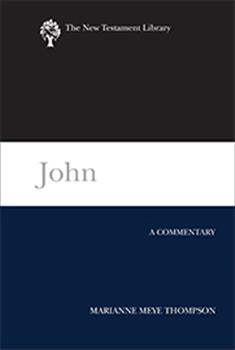
2. Marianne Meye Thompson, John: A Commentary (New Testament Library) I was first exposed to Thompson when she delivered a lecture at Wheaton College interacting with N.T. Wright’s book, Jesus and the Victory of God. I found her to be fair, thoughtful, and interesting. I have wanted to read her more since. She has also written a commentary on the Epistles of John (IVPNT) as well as Colossians and Philemon (Two Horizons). You can preorder it here.

John

3. Richard Longenecker, The Epistle to the Romans (New International Greek Testament Commentary) Anyone who has used Longenecker’s commentary on Galatians knows that this will be an exciting new commentary on Romans in a much respected series on the greek text. You can preorder it here.

51VY1B1W5kL._SX320_BO1,204,203,200_

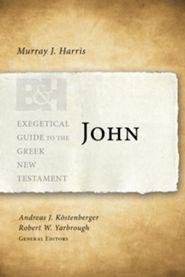
4. Murray J. Harris, John (Exegetical Guide to the Greek New Testament) Harris wrote the initial volume of this series (Colossians and Philemon) and once served as it’s editor. This series continues to receive positive reviews as the volumes are published. I look forward to this new volume by a much respected New Testament scholar. Preorder it here.

676870

5. Peter Gentry and Stephen Wellum, God’s Kingdom through God’s CovenantsKingdom Through Covenant offered many helpful insights into the meta-narrative of Scripture. I am convinced their progressive covenantal view deserves wide consideration, which is why I am excited to see a more accessible version in print. Preorder it here.

5155zMWFXnL._SY344_BO1,204,203,200_

6. John Barclay, Paul and the Gift. The debates surrounding Pauline Theology are fascinating. Although I have only read Barclay here and there I am excited any time a new theology on Paul is published. Preorder here.

9780802868893

Embracing Inadequacy: The struggle of loving a grieving spouse

Inadequate is the word that has defined the past four months of my life. This is not merely a sentiment, but has been observable, as each day has passed. My wife had experienced a life-changing event and there was nothing I could do to fix it. The loss of Kelsey’s Dad was unexpected and devastating. My bride felt as though she were broken into pieces. I filled my hands with as much as I could, but no matter how hard I tried there were no words that would put her back together.

This undeniable inadequacy produced a state of hopelessness. I was faced with the reality of watching the one I loved most suffer while I could do nothing but watch. What was I to do? In frustration and pain I reached to a former professor. This is how he responded:

     “I know you feel inadequate. But don’t underestimate the power of a husband who simply acknowledges the pain and groaning of living in a world where death still touches us. Groan with her. And point her to the One who groans alongside her—the Spirit prays with her, Christ prays for her. And Christ is making a world where death is no more.”

 I soon realized that Kelsey never needed me to be enough for this problem. She only needs the God of all comfort. (2 Cor. 1:3) So, what did I do? I embraced my inevitable inadequacy. This was perhaps the most freeing thing I could do. Grief has no quick fixes or easy answers. So you groan together. You weep, scream, embrace, pray, and long for the day when the victory of Christ is realized.

Beloved, it is ok not to know what to say. It is ok not to know what to do. Just be there. Love them, listen to them, and pray with them. The God of all comfort will minister to you both. I pray that those struggling to love their grieving spouses will embrace their inadequacy. God’s grace is sufficient for your loved ones struggle. I pray that you would endure in listening, loving, and praying. You are inadequate for this and that is absolutely ok. Why? -God is glorified as he works through the inadequate. I’ll be inadequate with you.

An interview with Dr. Mark Seifrid

photo:SBTS   Pastors, scholars, and students of Scripture have benefited from the Pillar New Testament Commentary Series for many years. The newest volume on 2 Corinthians is by Mark Seifrid, The Millard and Ernest Hogan Professor of New Testament Interpretation at the Southern Baptist Theological Seminary in Louisville, KY. Dr. Seifrid has graciously agreed to a brief interview on the writing of his new commentary. Seifrid has also written a wonderful book on Justification titled Christ, Our Righteousness which I commend to you.

1. Did the Lord encourage you in any particular way as you worked your way through 2 Corinthians? Maybe a new insight that you’re thankful for?

Seifrid: I received not only encouragement, but repeated challenges as I worked through the text of 2 Corinthians. As I explain in the commentary, the question at stake is the form of Christian life in the world. Our growth and progress is more “suffered” in God’s works in us than accomplished by our works. That means first of all, that we are to seek, find, and receive Paul’s words of comfort in this letter. It also means that we are to share that comfort with others in need, not only in words but also in works.

2 Did any passage stick out to you as more challenging to exegete? What made it challenging?

Seifrid: Paul’s account of being led to death in God’s triumphal procession in Christ has long been difficult for interpreters (2 Cor 2:14-17). It called for considerable reflection. I spent a good deal of time on 2 Cor 3:1-18, with Paul’s comparison of the apostolic mission to that of Moses, his paradoxical contrast of the letter and the Spirit, and his reference to the doing away of the “old covenant” in Christ. The passage is of considerable importance for understanding the letter as a whole. There is also considerable exegetical and theological confusion concerning its meaning in the recent literature. In working through the text, I was surprised to find how often I thought the English translations failed to capture the proper sense of the text (the rendering of 10:2 is an especially good example). In exegesis classes I regularly warn students against criticizing the translations from the pulpit. I stand by that warning. Nevertless, it have become increasingly aware of the importantce of a properly trained pastor, who is able to handle the text in the original languages, and thus able to offer a guide to reading the Scriptures to the congregation.

51sGVGSn80L._SY344_BO1,204,203,200_

3. What makes your contribution perhaps unique compared to the works already published on 2 Corinthians?

Seifrid: Others tell me that it is the combination of detailed exegesis and theological reflection. While not forgetting the main exegetical debates, I intentionally concentrated on commenting on the text and not on the commentaries. There is a danger within current interpretation of directing one’s comments to the guild of scholars rather than to the believing community. I tried to avoid that danger.

4. Which commentaries on 2 Corinthians do you recommend other than your own?

Seifrid: That is a difficult question! There are so many good commentaries available to us, it is hard to single out a few without unfairly slighting or neglecting others. The technical commentaries by Thrall (ICC), Harris (NIGNT), and Martin (Word) are obviously worth consulting. I also recommend David Garland’s commentary (NAC) and that of Victor Paul Furnish (AB).

5. What encouragement would you give to New Testament PhD students hoping to teach and publish in the future?

Seifrid: Above all else, listen, listen, and listen again to the Scriptures. That advice applies not only to exegetes, but to also to others, especially systematicians. On the other hand, biblical scholars need to be reminded to read theology, especially historical theology, so that they become aware of the way in which their exegetical “discoveries” fit into the Christian tradition. That is the only way to know what we are saying! Finally, we must make sure that we become familiar with the exegetical and theological debates that are taking place in the larger world of theological scholarship, and not merely within our own circles. Otherwise we run the risk of merely talking to ourselves.

Thank you Dr. Seifrid for taking the time to share these helpful insights! May God bless your work as you equip students for gospel ministry and as you continue to write. Readers can purchase Mark Seifrid’s commentary from Eerdmans and Amazon.

Lastly, I hope to offer more posts on Seifird’s take on passages in 2 Corinthians in the coming weeks. Stay tuned!

Photo: Seifried: SBTS, Commentary: Amazon

Highlighter Yellow: What My Father-in-law’s Bible taught me about how to read God’s Word.

I have learned more about loss this week than in any other time in my life. Last week while enjoying NBC’s Thursday night line-up my wife got the call that her Dad, Ron Hines, suddenly passed away. So we did what anyone else would do and rushed home. Unfortunately for us, that included a 10-hour drive from North Carolina to Illinois. Naturally, there were many tears and much pain.

The highlight of this awful week was my wife’s speech at her Dad’s funeral. She dedicated a large section of the speech to findings in his Bible. Ron Hines devoured his Bible. Bright yellow highlighter covered every book, notes thoughtfully written to the side of prominent passages, and many papers of sermon notes. My wife was blessed as she read his notes from this tattered book. Ron read his Bible often, marked it thoroughly, and prayed over what he read.

There is debate on how Christians should treat their bibles. A dear friend of mine (and one of the most godly guys I’ve ever known) from College never wrote in his. He was worried that highlighting too much would defeat the purpose all together. He also thought writing notes would be further self-defeating, “What if you change your mind?” He reasoned. Having a degree in Biblical Studies I have thought about these issues often. How a believer interacts with Scripture is important. Contrary to what some may say, the Bible is unique. However, I must say that seeing my sweet wife look over her fathers marked up Bible gave me a different perspective.

Mark it up. Highlight, underline, and make notes. I am convinced that this not only cultivates a more thoughtful reading of God’s Word, but more than that I am convinced that it is a message to a future generation: The Bible is not meant to merely be read, it is to be devoured. It is the very air a Christian is to breathe. That is what Ron Hines’ Bible says of God’s Word.

I am sure that there will be many who will disagree. You just can’t make yourself take a pen to such a Holy Bible. I hear ya, but let me tell you -My wife wouldn’t trade Ron Hines’ NIV Men’s Devotional Bible for all the money you had to offer. It will testify to her for years that God is good, His Word is true, and that our lives are to be lived for His glory.

Ron was far from a perfect man. He was a sinner. Sometimes obviously so. Thankfully Ron was aware of his sinful nature and found life in a book he marked with yellow highlighter. I can only hope my future children will be lead to love the Bible more by my life and like Ron- my death.

Seminary and Scared: Why I am terrified to be at SEBTS and how you can pray for me.

I am absolutely terrified.

Tomorrow marks my first day as a seminary student at the Southeastern Baptist Theological Seminary in Wake Forest, N.C. I am thrilled of course, but I would be lying if I didn’t say I was scared. I am scared because I am about to get exactly what I asked for and it makes me very uncomfortable. Let me explain.

I have always been an introvert. Hand me a cup of coffee, a good book, and I will retreat for hours away from any living human being. This is not exactly a problem, but if not watched carefully can become one. This is especially the case for those who have a desire for gospel ministry. This is not hard to understand. Ministry is first and foremost about God’s glory, but secondly ministry is about loving, interacting, and sharing life with people. This includes getting the gospel to our unbelieving neighbors.

After graduating Boyce College I became aware that I was lacking in persistent evangelism and disciple making. So after two years I applied to Southeastern. I chose to do so because they advertise the institution as a, “Great Commission Seminary” where every classroom is a “Great Commission Classroom.” Consider the seminary’s mission statement:

“Southeastern Baptist Theological Seminary seeks to glorify the Lord Jesus Christ by equipping students to serve the Church and fulfill the Great Commission.”

In fact, during the first address to incoming students SEBTS President Dr. Danny Akin had the following as one of his points,

9. “Put no limitations on how and where our King might use you. Ask the Lord to give you the ability to truly pray, “Lord, why should I stay?” (Being Faithful To the High Calling of Christ)

Have mercy what have I done.

At Southeastern there is no room for academia for academia’s sake. The Bible is not an end to itself, but a means to love and know Christ. Furthermore, there is no room for those who do not want to be on mission now as they prepare for ministry. These people walk what they talk. 

The introvert in me needs this place. I need brothers to push me to share the gospel, take initiative with my neighbors, and to be open to the possibility that God could send me anywhere. 

So please pray for me. Pray that I would be disciplined in every class. Pray that I would be faithful with my time not ever neglecting to serve my wife with joy. Pray that as I grow in theological knowledge my heart will grow in doxological praise.

Finally, pray that God gives me a burden for my neighbor. That a love would grow in me that can only be expressed in sharing the gospel for the glory of God.

I am terrified and that is a very good thing.

Beyond Racial Gridlock by George Yancey: A summary and some brief thoughts.

As we move deeper into August schools everywhere are preparing for the upcoming Fall semester. As usual this means faculty members at every level are attending workshops to kickoff the new year. Here in Wake Forest the Southeastern Baptist Theological Seminary is no different. During these workshops professors heard presentations from Dr. George Yancey, Professor of Sociology at the University of North Texas. The subject regarded Yancey’s Beyond Racial Gridlock (IVP, 2006). In this work Yancey evaluates four secular models that attempt racial reconciliation. He does so by sketching a brief history of the position, analyzing its strengths and weaknesses, and discussing how Christians have incorporated the model in their own attempts at racial reconciliation. Ultimately, he finds these models to be incomplete and offers a solution from his own Christian worldview. What  follows is a summary of Beyond Racial Gridlock. Justice cannot be done to the full weight of his arguments so readers are encouraged to check out the book. I am thankful for SEBTS and their desire to see diversity not only on the campus, but in the Church as well. 

Foundational for Yancey’s book is the idea that there are two types of racism. One view is individual racism. Yancey writes, “An individualist understanding defines racism as something overt that can be done only by one individual to another.” (pg. 20) The other; however, is structural. “According to this view, society can perpetuate racism even when individuals in the society do no intend to be racist.”(pg. 22) Of course, how one defines racism will dictate the solutions offered. Yancey points out that the first two models are based on a more individual definition and the final two are based on a structural point of view.

4 Secular Models

Colorblindness: This approach is somewhat self-explanatory considering its title. Colorblindness has has its desire to make race a nonissue in society. Yancey states it this way, “The core argument of the colorblindness model is simple: to end racism, we have to ignore racial reality.” (pg. 29) Yancey goes on to describe this position as seeking “not to take race into account” and having as their goal “to get beyond racial issues.” 

Anglo-Conformity:  This model desires to teach minorities the proper ways to succeed in life. This includes education, how to find and keep a job, etc. Yancey describes the goal of this approach as follows, “The majority must teach people of color how to succeed, while the minority is responsible for taking those lessons to heart so they can achieve economic and educational success.” (pg. 42) Fundamentally, this approach finds the problem to be socio-economic as opposed to being about race. “Anglo-conformity is a very materialistic model. At its core is the belief that the real source of racial strife is economic disparity between the racial majority and minorities.” (pg. 42)

Multiculturalism: Advocates of this approach long to preserve the cultures of all people and see them as helpful contributors to our world. Yancey equates multiculturism to cultural pluralism; however, he wants to be sure to define the terms properly. Cultural pluralism is not the same as “inegalitarian models of racial oppression (in which cultural separation was dictated to the minority by the majority).” (Pg. 53) Later Yancey states, “Multiculturalism is the practical application of cultural pluralism.” (pg. 53)

White Responsibility: This argument suggests that the problems of racism are primarily because of the “majority group.” Thus, it is the responsibilty of this majority group (whites) to end racism. First, the group must deal with the racism inside them before any progress can be made. Extreme proponents of this position even argue that minorities are completely incapable of being racist. (pg. 65) Yancey writes, “From their viewpoint, racial minorities can have prejudice, but they cannot be racist because racism requires structural power. Since only dominant group members have structural power in our society, only dominant group members practice racism.” (pg. 65)  

After discussing each model Yancey discusses why he believes these approaches fail. Consider this quote, 

“Each of the four secular models identifies one source of racial conflict and proposes solutions to deal with that source. Certainly each source is at last partially responsible for racial alienation. The strength of these models lies in their recognition of a particular cause of racial tension and in their effort to resolve it. Their weakness lies in their refusal to identify other sources of the problem. At best, these incomplete models can help us correct certain aspects of racial tension, but they will never eradicate the problem.” (pg. 79)

A Mutual Responsibility Approach 

With these incomplete models in mind Yancey establishes that the root of racism is sin. Everyone is a sinner-no one is excluded, except Christ. Communicating this with evangelical conviction Yancey writes, “Our sin nature drives majority group members to look for both overt and subtle ways to maintain the advantages of their racial status. Our sin nature motivates people of color to use their victim status to gain whatever they can.” (pg. 80) Yancey concludes that racial reconciliation is a mutual responsibility because of this universal sin nature. In chapters seven and eight Yancey discusses the sin of both European Americans and racial minorities. I would encourage readers to think about what Yancey writes; however, more reflection is needed on my part before I can discuss them here. 

After establishing that everyone is mutually responsible Yancey turns to Scripture. He mentions John 4 and discusses the woman at the well and Jesus’ call of Matthew the tax collector. Yancey then points to Jesus as the way and example of reconciliation.

The question thus becomes, what does mutual responsibility look like? It starts with each party being honest about their fears and open to discussing the needs and concerns of others. Using an illustration from his own marriage (pg. 129-131) Yancey shows that the willingness to listen to the concerns of others regarding racism is vital.  Mutual understanding can lead to a mutual responsibility of reconciliation.  Yancey then offers a starting place in regard to mutual responsibility:

Multiracial churches: “One of the best ways to to heal racial strife is to fellowship with Christians of different races.” (Pg. 144) 

Social Networks: “For racial perceptions to be influenced by interracial friendships, we must be involved in social networks that are thoroughly multiracial.” (pg. 146) Later Yancey writes, ” Diversifying our social networks is a Christian was to help heal strife in our society.” (pg. 146)

Political Activism: Here Yancey discuses the tension between Republicans and Democrats. He notes that because Christians are pro-life they generally vote for conservative candidates. Unfortunately, Republicans are less likely to support programs based on race. Yancey makes a good case that Christians should be careful about political activism, but should participate. (pg.147)

Christian Academic Institutions: “Christian colleges’ failure to promote racial reconciliation is particularly distressing because they are the source of our future Christian leaders.” (Pg. 149)

Fully aware that he cannot provide the perfect answer to racism this side of glory Yancey ends his book with a plea for Christians to contribute to a more complete solution. Ultimately, it must be the gospel that does away with racism, but this book provides helpful ways that Christians can contribute in the healing process. The weight falls not on “them” or on “us” but there is a mutual responsibility due to the nature of sin to seek reconciliation because of the gospel of Jesus Christ. What more could we ask of an author than that? 

Is Church Membership a Biblical Concept?

This morning I attended a meeting in St. Louis for church planters called Plant Midwest. They bring in a variety of different teachers to exhort those who are involved in church plants. The speaker for the day was Sam Storms, pastor of Bridgeway Church in Oklahoma City, Oklahoma. The topic was church membership. Storms is a great person to address such a topic, because when he was called to Bridgeway, the church was without any form of church membership.

Storms posed the following question, “Is church membership biblical?”

“Well, that depends on how one defines biblical!” He responded.

Storms went on to explain that there is no where in Scripture that states plainly something like, “Thou shall be a member of a church.” The question is, is such a statement even necessary to defend church membership? The answer is most certainly no.

Storms then offered eight truths found in Scripture that make little sense if not understood in a covenant membership context.

1. Accountability to the elders in the church

Obey your leaders and submit to them, for they are keeping watch over your souls, as those who will have to give an account. Hebrews 13:17

Let the elders who rule well be considered worthy of double honor, especially those who labor in preaching and teaching. 1 Tim 5:17

2. Requirements that shepherds pastor their flock

 Pay careful attention to yourselves and to all the flock, in which the Holy Spirit has made you overseers, to care for the church of God,[a] which he obtained with his own blood. Acts 20:28

Shepherd the flock of God that is among you, exercising oversight, not under compulsion, but willingly, as God would have you; not for shameful gain, but eagerly; not domineering over those in your charge, but being examples to the flock. 1 Peter 5:2-3 

3. Church discipline

If your brother sins against you, go and tell him his fault, between you and him alone. If he listens to you, you have gained your brother. But if he does not listen, take one or two others along with you, that every charge may be established by the evidence of two or three witnesses.  If he refuses to listen to them, tell it to the church. And if he refuses to listen even to the church, let him be to you as a Gentile and a tax collector. Matthew 18:15-17

When you are assembled in the name of the Lord Jesus and my spirit is present, with the power of our Lord Jesus. 1 Corinthians 5:4

For what have I to do with judging outsiders? Is it not those inside the church whom you are to judge? God judges those outside. “Purge the evil person from among you. 1 Corinthians 5:12-13 

4. List of widows enrolled

Let a widow be enrolled if she is not less than sixty years of age, having been the wife of one husband. 1 Timothy 5:9

5. Congregational decision making

Then it seemed good to the apostles and the elders, with the whole church, to choose men from among them and send them to Antioch with Paul and Barnabas. They sent Judas called Barsabbas, and Silas, leading men among the brothers. Acts 15:22

6. Responsibility in the household of faith

So then, as we have opportunity, let us do good to everyone, and especially to those who are of the household of faith. Galatians 6:10

7. The gathering of the church

If, therefore, the whole church comes together and all speak in tongues, and outsiders or unbelievers enter,will they not say that you are out of your minds? 1 Corinthians 14:23

8. The variety of biblical metaphors for the church: body, flock, building, etc.

When considering these biblical realities it seems obvious that the answer to, Is church membership a biblical concept, is yes. One is hard pressed to explain the previous scriptural commands and truths outside of the context of church membership. I am grateful that Sam Storms took the time to speak at Plant Midwest. However, I do want to say that what has been written was derived from my own personal note taking. Therefore, all errors should be attributed to me and not Dr. Storms.  However, I do believe I represented his point faithfully.

You can purchase Dr. Storms books here:

http://www.amazon.com/Sam-Storms/e/B001JRUR9M/ref=sr_tc_2_0?qid=1377554269&sr=8-2-ent